Start with your finished product and manufacturing process. Choose husk or powder, define purity and particle-size test methods, set functional and safety requirements, then validate a representative sample. Approve a written specification and commercial-lot acceptance criteria before scaling up.
Start with the finished product and process
The right psyllium specification is the one that meets your finished-product requirements under your actual manufacturing conditions. Begin with the intended application, target texture, ingredient declaration, mixing equipment, water availability and destination market. A commercial purity number or mesh label alone does not establish suitability.
This guide provides a practical buyer framework. The application checks below are trial priorities, not universal grade recommendations or confirmation that a particular Systler lot is qualified for your use.
Match the specification to the application
| Application | What to define first | What to check in a trial |
|---|---|---|
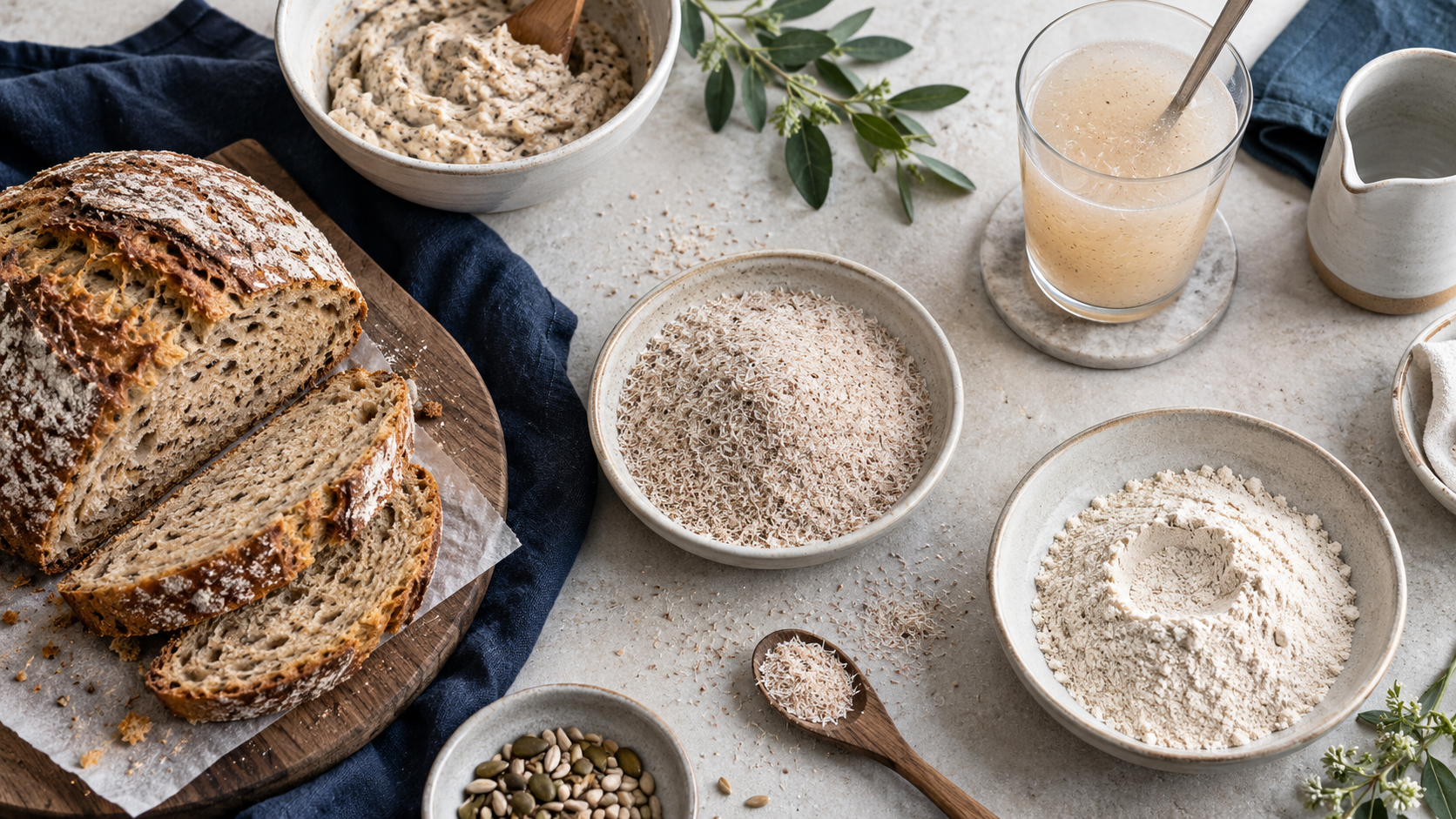
| Bakery and gluten-free mixes | Desired dough handling, crumb texture, water addition and mixing sequence | Mixing consistency, dough handling, baked texture and performance through the intended shelf life |
| Drink mixes and dispersible powders | Serving instructions, liquid volume, mixing method and time before consumption | Lumping, dispersion, thickness over time and acceptable mouthfeel |
| Fibre blends and sachets | Form, appearance, serving mass and compatibility with other ingredients | Blend uniformity, segregation, filling consistency and prepared-product texture |
| Capsules and tablets | Dosage-form requirements, target fill weight and equipment constraints | Bulk density, flow, weight variation and relevant finished-product performance |
| Binding and texture systems | Required structure, process temperature, hydration time and other ingredients | Water distribution, texture, processing consistency and stability in the complete formulation |
A successful trial in one formulation does not establish performance in another. Record the full recipe and process when comparing candidates.
Choose whole husk or powder deliberately
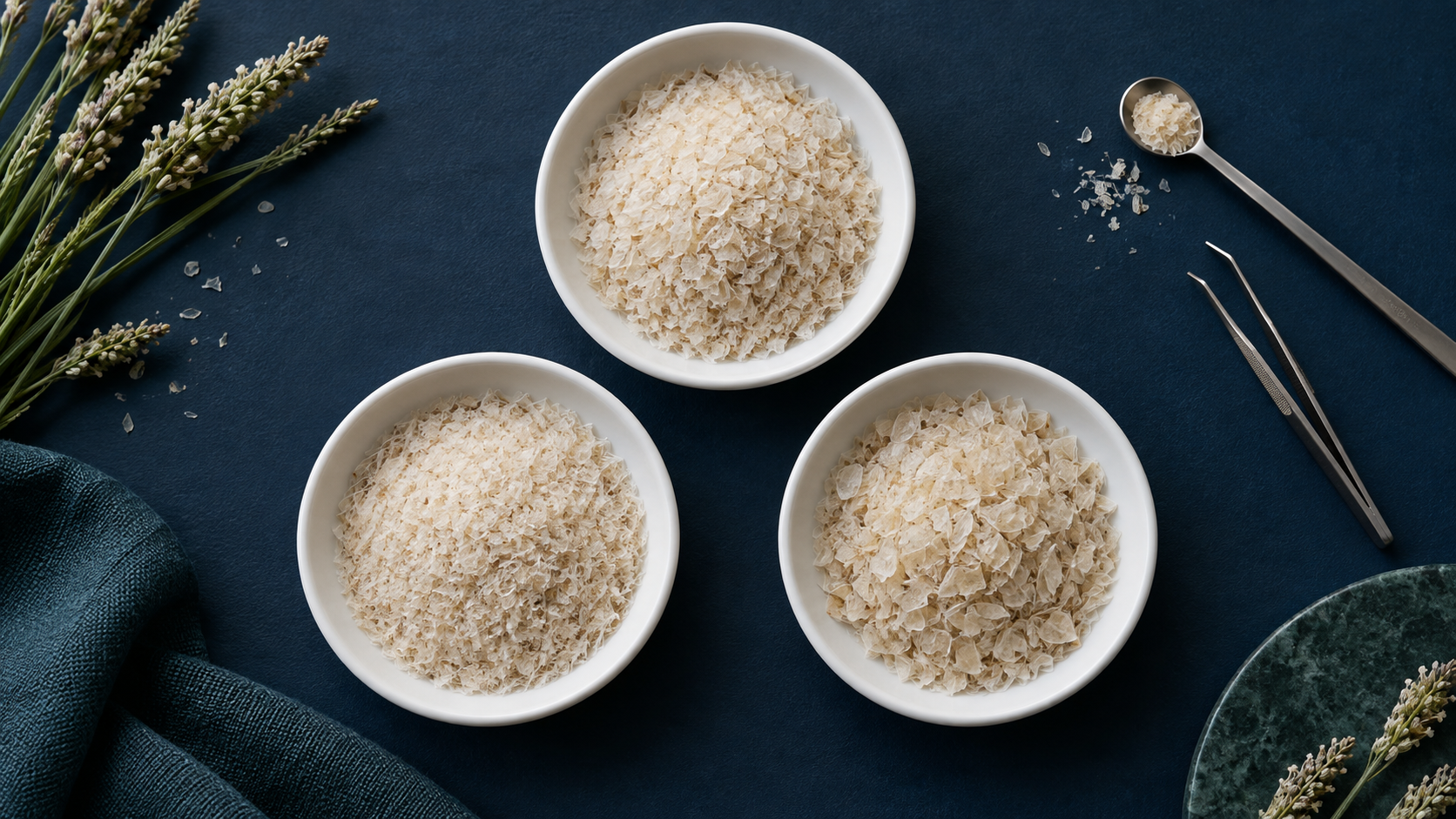
Whole husk and milled powder have different physical forms. Decide whether visible husk particles suit the finished product or whether a more finely distributed ingredient is needed. Assess appearance, mouthfeel, handling and blending in the real process. Do not treat the two forms as automatically interchangeable at the same addition rate.
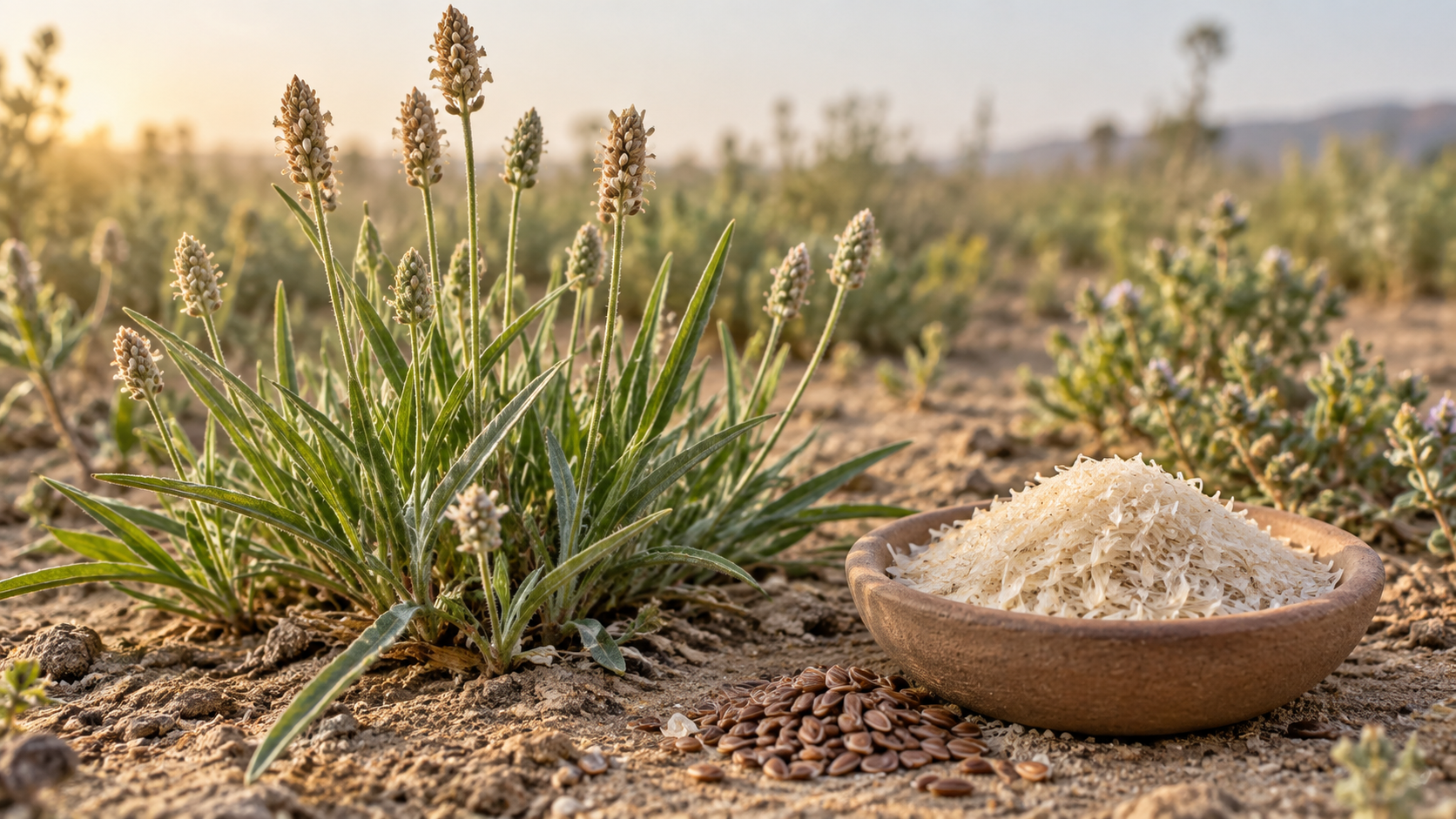
The European Medicines Agency identifies ispaghula husk as the seed coat of Plantago ovata and describes its water-swelling, mucilage-forming behaviour. That background helps explain why hydration matters; it does not define a food formulation, commercial mesh grade or buyer acceptance limit.
Specify particle size beyond a mesh number
For powder, request the sieve standard, aperture size and required percentage passing or retained. A label such as 80 mesh is incomplete without its test basis. Where a distribution matters, agree more than one sieve point and document the method.
Compare candidate powders using the same mixing sequence, liquid temperature and observation times. For a drink mix, distinguish easy dispersion from the final texture after hydration. Do not assume that selecting a finer powder will produce a clear beverage or solve every mixing problem.
Separate purity from functional performance
Ask the supplier to define commercial purity and how it is measured. A stated husk purity is not automatically a dietary-fibre result, a swelling result or a microbiological guarantee. If nutritional composition is required for formulation or labelling, request the relevant analytical result and method separately.
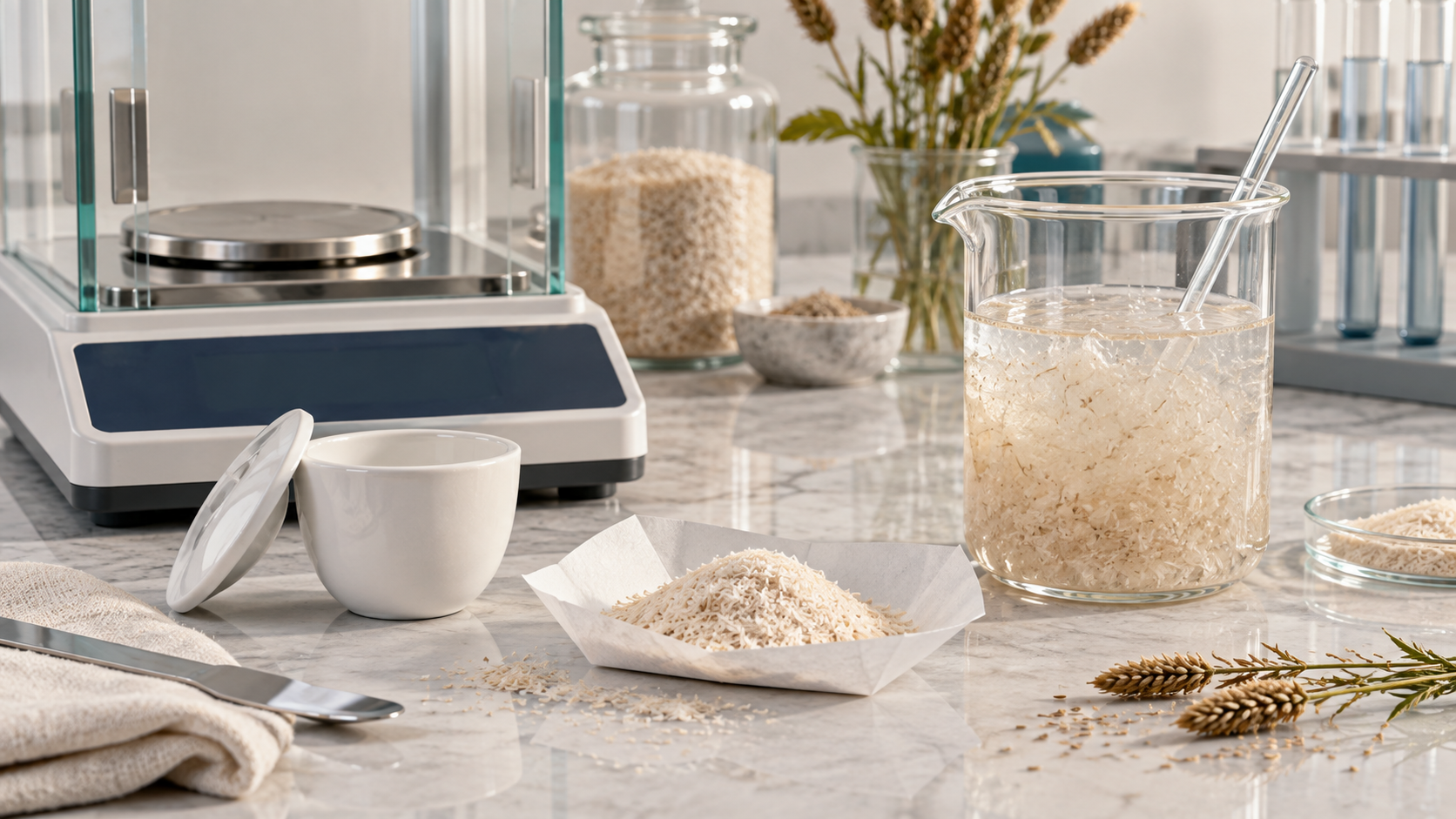
Specify swelling volume with its units and test conditions where it is relevant. If viscosity is important, agree concentration, temperature, hydration time and measurement conditions. Include moisture, total ash, acid-insoluble ash and sensory acceptance requirements as appropriate. Compare results only when units, methods and reporting bases are compatible.
Agree safety, documentation and market requirements
Give the supplier the destination country and intended product category. Agree the applicable microbiological and contaminant requirements, test methods, sampling basis and documents before ordering. Do not use a general commercial grade name as evidence of regulatory compliance.
Request a specification, representative sample information, lot-specific certificate of analysis and traceability details. Where organic, gluten-free or other certification is required, verify the actual certificate, product coverage and validity. Qualification must be supported by current documentation for the proposed material.
Run a controlled comparison before scale-up
- Set acceptance criteria: define the texture, processing and analytical outcomes that determine a pass.
- Record the sample: retain its identity, lot reference and supplier specification.
- Control the trial: compare candidates at documented inclusion levels, water additions and mixing conditions.
- Measure the outcome: record observations at agreed times, including relevant storage checks.
- Confirm scale-up: verify performance on the intended equipment and approve the written specification.
Sample approval should be followed by agreed commercial-lot acceptance checks and change-control arrangements. A sample is not proof that every future shipment will perform identically.
Build a complete RFQ
- Application, destination market and required product category.
- Whole husk or powder; commercial purity definition and test basis.
- Particle-size distribution and sieve method where applicable.
- Functional, moisture, ash, sensory and safety requirements with methods and units.
- Required documentation, certification and sample quantity.
- Order volume, packaging, delivery terms and target delivery window.
- Trial acceptance criteria and procedure for specification changes.
Compare cost at the required performance
Compare candidates on a consistent delivery and quality basis. Consider formulation usage, processing adjustments, testing, packaging and handling alongside the ingredient price. The most suitable choice is the material that meets the agreed outcome consistently within the commercial requirements.
Frequently asked questions
Is the highest purity always the best choice?
No single purity level suits every application. Define the required composition, appearance, performance and safety criteria, then validate a candidate against them.
Can I choose a grade using mesh alone?
No. Mesh describes only part of the physical specification. Form, purity definition, functional results, moisture, safety requirements and process behaviour also need consideration.
What if I do not know which specification to request?
Start by sharing the application, process, destination, required documents and a description of acceptable finished-product performance. Use sample trials to establish the final specification before commercial approval.
Key takeaways
- Start with the application, process and measurable acceptance criteria.
- Define commercial purity and particle-size methods; grade labels alone are incomplete.
- Assess hydration, texture and processing performance in the actual formulation.
- Agree destination-specific testing and verify required documentation.
- Approve the specification, trial results and commercial-lot checks before scale-up.
References & sources
- Plantaginis ovatae seminis tegumentum - herbal medicinal product — European Medicines Agency (EMA) · View source