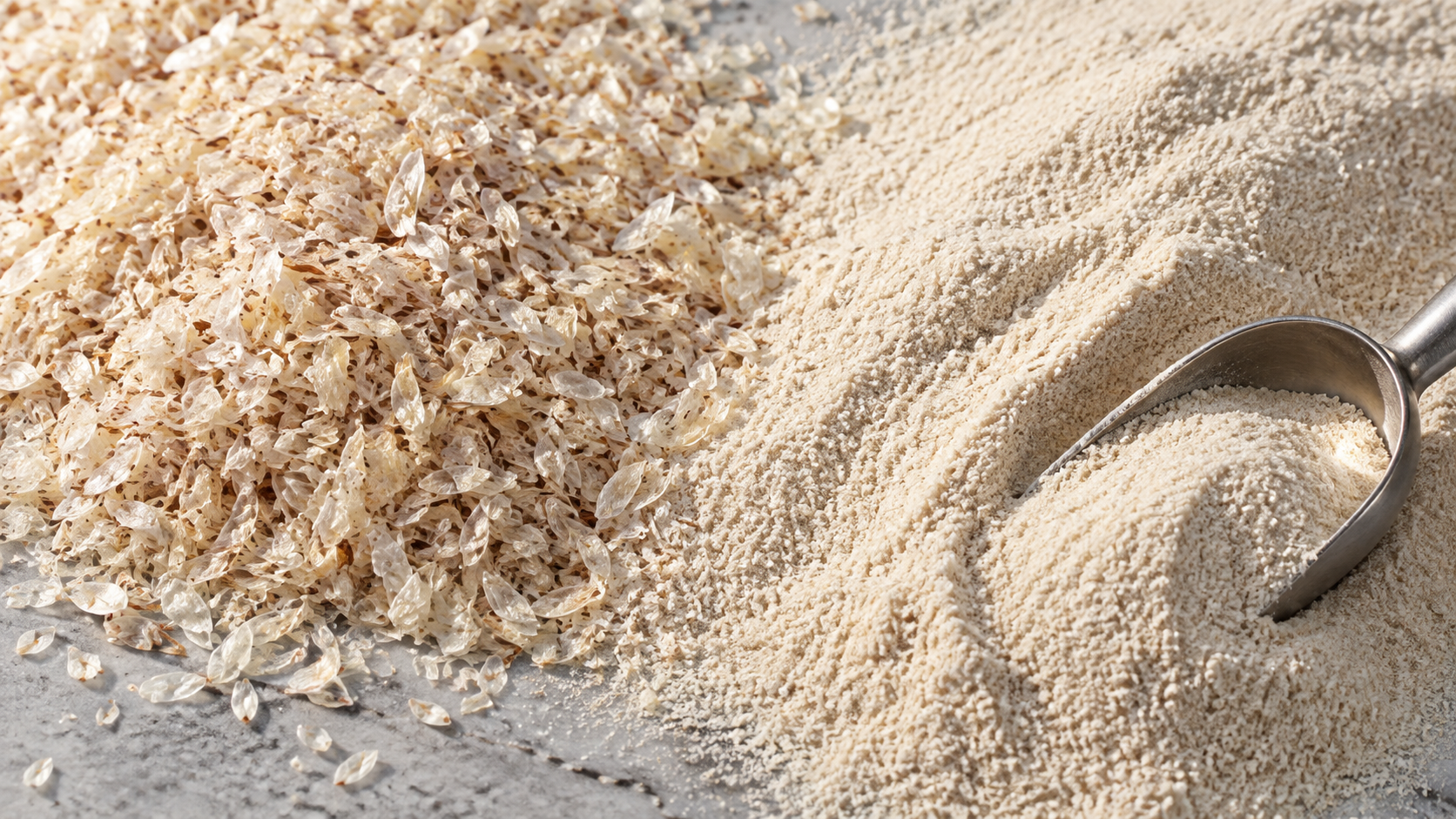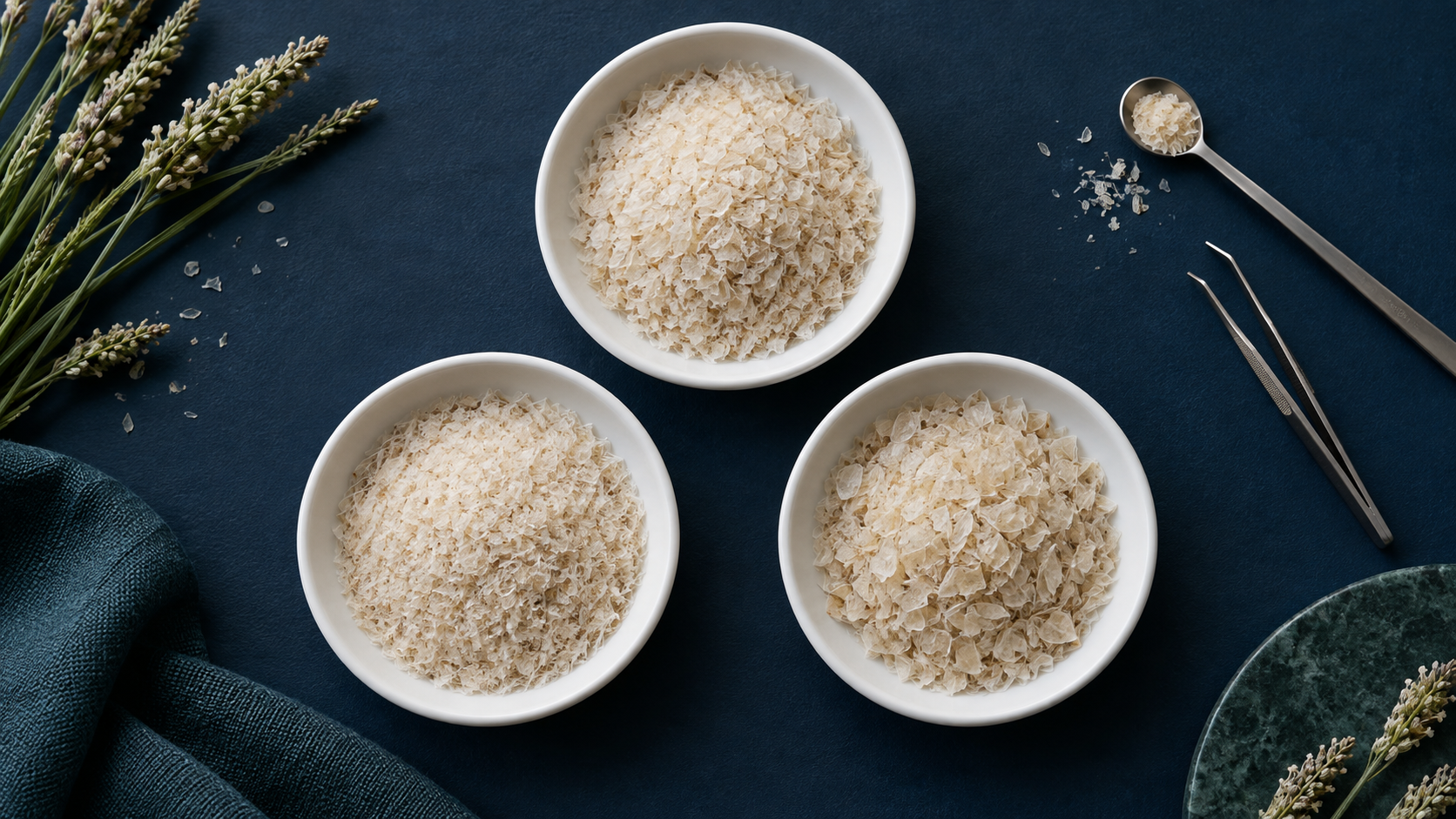
Whole psyllium husk and husk powder are different physical forms of seed-coat material. Powder is milled husk specified by particle size. Choose for the intended process and texture; specify purity, swelling and safety separately. Do not substitute one form for another without evaluating the application.
Start with the correct material
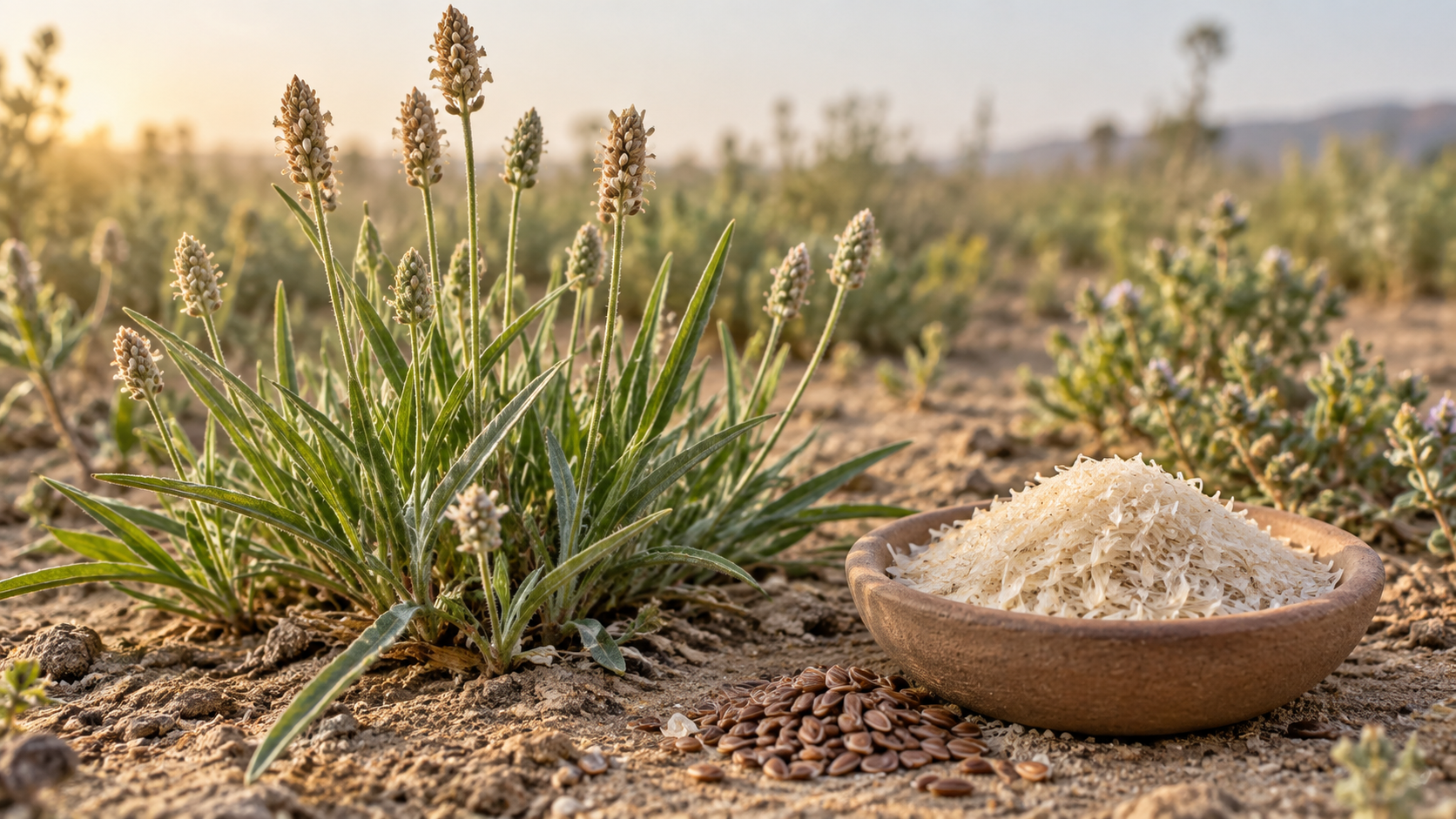
Psyllium husk is seed-coat material; psyllium husk powder is the milled form of that husk. A product described only as “psyllium powder” needs clarification. Confirm the botanical identity and plant part. Whole seeds, husk and milled husk are not the same buying description.
The cited FSSAI document describes husk obtained from dry seed coats. This supports the material distinction, not equivalence between every powder offer.
1. Compare the forms
| Buying question | Whole husk | Husk powder |
|---|---|---|
| Physical description | Separated husk with visibly fibrous structure. | Husk subjected to size reduction. |
| Size requirement | Agree the physical description and relevant size criteria. | Specify the sieve standard and passing criterion or another defined method. |
| Trial decision | Assess the coarser form against the process and texture requirements. | Assess the specified powder against the same acceptance criteria. |
| Other requirements | Purity, swelling, safety, documentation and commercial terms. | The same requirements; milling does not replace them. |
2. Let the application decide
Ask the formulator to describe the finished product, equipment, use level, texture expectations and process constraints. Select trial samples around those details. Avoid choosing powder simply because it sounds more refined or whole husk because it appears more natural.
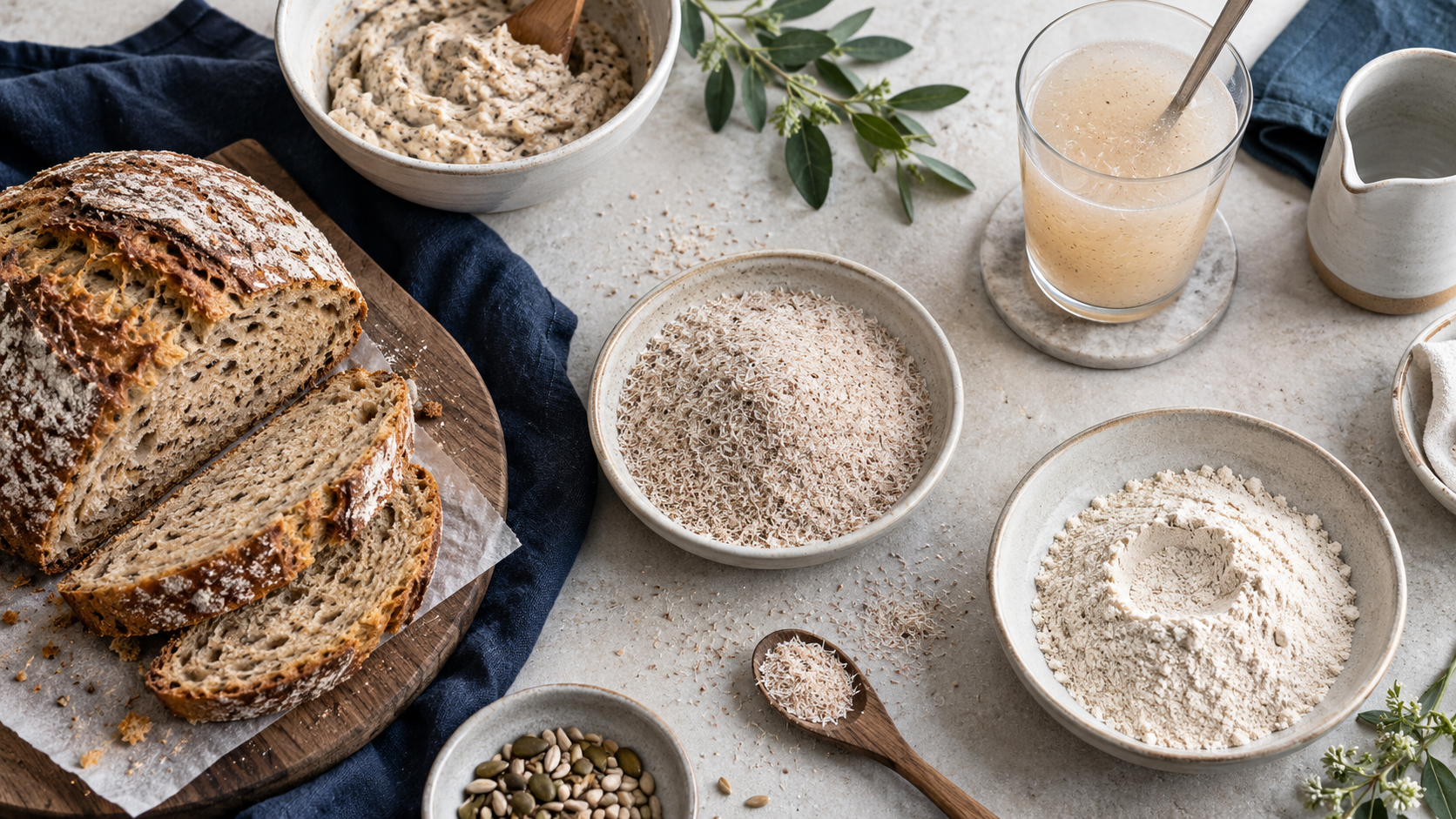
For a beverage project, define dispersion and texture checks. For bakery or binder use, define processing and finished-product acceptance. These are questions to test, not promised advantages of either form.
3. Specify powder size precisely
WHO’s herbal-material quality-control guide, chapter 2, describes sieve aperture and passing criteria. Request the actual specification rather than relying on a mesh number alone.
The mesh guide explains the questions to ask. Keep size separate from commercial purity and swelling: one does not supply the missing specification for another.
4. Run a controlled comparison
- Label samples with supplier, form, specification and batch reference.
- Use the intended formulation and record ingredient amounts by mass.
- Document mixing sequence, equipment, water addition and evaluation times.
- Assess the required appearance, texture and process behaviour.
- Record pass, fail or further-trial decisions against defined criteria.
Illustrative scenario: a formulation developed around whole husk is switched to powder. Validate the revised process rather than assuming a spoon-for-spoon substitution reproduces the original result. This is a trial-planning example, not a dosing recommendation.
5. Confirm the quality package
Request a TDS and representative COA for the offered form. Define commercial purity, moisture, ash, swelling, microbiological limits and required contaminant tests. Ask about treatment restrictions where relevant. If independent testing is required, agree scope, cost and timing.
A successful development sample does not establish the results of a future commercial batch. Confirm how supplied material will be linked to its COA and external reports. Separate sample approval from sales-lot release.
6. Compare complete quotations
| Offer detail | What to align |
|---|---|
| Product | Form, purity basis and powder-size requirement. |
| Evidence | Representative versus actual-lot documents; included and excluded tests. |
| Packing | Net weight, bag/liner requirements, labels and pallets. |
| Commercial terms | Quantity, currency, Incoterm, named place, lead time and validity. |
If a supplier proposes another form, review its specification and sample. Record any accepted deviation in the order rather than accepting substitution implicitly.
Frequently asked questions
Is husk powder made from the whole seed?
Husk powder should mean milled husk. Clarify plant part and identity when wording is unclear.
Is powder always easier to use?
No. Evaluate the particular powder under the intended conditions.
Can both forms have the same purity label?
Ask what the supplier offers and how it defines purity. Availability and equivalence need confirmation.
Prepare a sourcing request
State the chosen form or request clearly identified trial options, then add quantity, destination, packing and tests using the RFQ checklist. Lock the specification before comparing prices.
Key takeaways
- Distinguish whole husk and powder in the product description.
- Powder needs an agreed particle-size specification.
- Neither form is automatically superior.
- Validate substitutions in the actual process.
- Sample approval does not replace required sales-lot evidence.
References & sources
- a