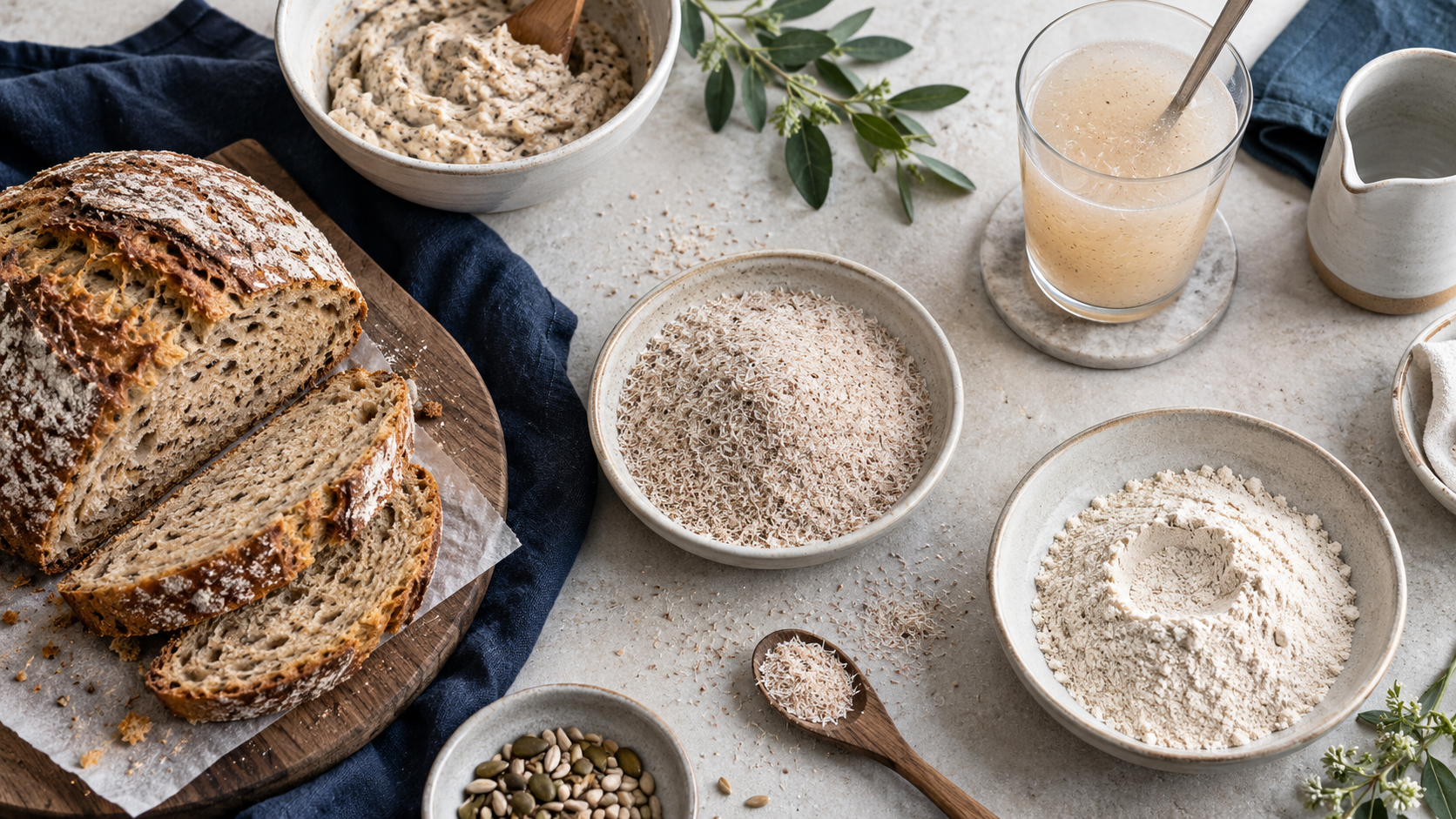
Define the psyllium form, purity basis, particle-size method, functional requirements and safety tests. Add quantity, packaging, destination, named delivery terms and document due stages. Ask each supplier to confirm compliance, identify deviations and itemise testing charges before comparing offers.
Write an RFQ that produces comparable offers
A request for quotation (RFQ) should give every supplier the same technical and commercial brief. Asking only for “99% psyllium at the best price” leaves important questions unanswered: husk or powder, particle size, test methods, packaging, delivery basis and which documents must be available before approval.
Use the checklist below as a procurement framework. Set numerical limits with your technical team for the intended application and destination. These are fields to agree, not a universal specification or confirmation that any particular lot meets them.
Define the product and intended use
State the product name, botanical identity, plant part and physical form. For psyllium husk, identify Plantago ovata and specify whole husk or husk powder. Explain whether the material is for a bakery mix, drink powder, fibre blend or another application. Include important colour, odour, taste and processing expectations.
If you require conventional or certified organic material, say so explicitly. Name the required certification scheme and destination, and request evidence covering the proposed product and relevant operator. Do not assume that an organic claim establishes acceptance in every market.
Technical specification checklist
| RFQ field | What to state | What to clarify |
|---|---|---|
| Form and purity | Whole husk or powder; required commercial purity | Definition, measurement method and permitted extraneous matter |
| Particle size | Required distribution for powder | Sieve standard, aperture and percentage passing or retained |
| Functional performance | Swelling volume or other relevant acceptance criterion | Units, method, hydration time and test conditions |
| Moisture and ash | Separate limits for required parameters | Method and as-received or dry-weight reporting basis |
| Sensory attributes | Acceptable appearance, odour, taste and texture | Reference sample or documented evaluation procedure |
| Safety testing | Named organisms, contaminants or residue panels and limits | Method, reporting units, detection capability and sampling basis |
| Packaging and storage | Net pack weight, liner, closure and pallet requirements | Pack dimensions, storage conditions and remaining shelf life |
A commercial purity percentage should not be treated as a dietary-fibre result or a guarantee of functional performance. Where nutritional analysis is needed, request that separately. Avoid comparing results reported on different methods or bases without technical review.
Make testing requirements specific
Provide a test schedule suited to the product, intended use and destination. Where required, identify microbiological parameters, individual heavy metals, pesticide residue scope, mycotoxins and ethylene oxide-related testing. Expressions such as “all tests” or “export quality” do not define an acceptance standard.
For each requested test, state the limit, unit, method or acceptable method family, required laboratory evidence and stage at which the report is needed. Ask the supplier to identify any subcontracted testing, extra charges, sample quantity and turnaround time. A laboratory's ability to perform a test is separate from a report showing that the proposed lot passed.
Assign documents to the right stage
| Stage | Examples to request where applicable | Acceptance question |
|---|---|---|
| Supplier qualification | Company and facility details, relevant licences, certificates and traceability information | Does the evidence cover the proposed supplier, facility and product? |
| Quotation | Offered specification, representative COA, deviations and testing-cost schedule | Is there enough verified information to assess the offer? |
| Commercial-lot release | Actual-lot COA and agreed lot-specific reports | Do the lot identity, methods and results meet the purchase requirements? |
| Shipment | Invoice, packing list, transport document and agreed origin or shipment certificates | Are the documents consistent with the shipment and destination requirements? |
Mark each document as mandatory or optional and give it a due stage. A previous-lot COA may support an initial discussion, but it does not establish compliance of the sales lot. If evidence is required before quotation or order approval, a promise to provide it at dispatch does not meet that deadline.
Complete the commercial brief
- Trial quantity and each commercial quantity tier, quoted separately.
- Net weight per pack, packaging material, pallet requirements and labelling.
- Destination country, named delivery point or port, and transport plan.
- Currency, quotation validity, payment terms and minimum order quantity.
- Required dispatch or arrival window and production lead time.
- Separate charges for testing, samples, documents, packing and freight where applicable.
Specify the chosen Incoterms® rule, named place or port, and edition. ICC explains that Incoterms® 2020 allocate costs, risks and obligations between buyer and seller. Choose the rule for the actual shipment arrangement; do not assume that two offers with different delivery terms are directly comparable. The official ICC guidance is the reference for this trade-terms context.
A reusable RFQ brief
Complete the following fields before requesting a firm offer. If a requirement is undecided, label it “proposal requested” and require technical approval before ordering.
- Product: [whole psyllium husk / husk powder]; [botanical identity]; [application].
- Specification: [purity definition]; [particle-size method and distribution]; [functional and quality limits].
- Market and evidence: [destination]; [product category]; [test schedule]; [certifications and document due stages].
- Quantity and packing: [trial quantity]; [order tiers]; [net pack weight]; [packing and pallet details].
- Delivery and price: [currency]; [Incoterms® rule, named place/port, 2020]; [delivery window]; [validity and payment terms].
- Supplier response: confirm each requirement, list every deviation, itemise exclusions and charges, and give sample and production lead times.
Compare quotations against one approved requirement
Keep a dated RFQ revision and ask suppliers to refer to it. Compare the offered specification, evidence status, packaging, delivery basis, testing costs and lead time before comparing the final price. Record substitutions or exceptions explicitly; an alternative grade should remain a separate offer until approved.
For formulation-sensitive orders, agree representative sample trials and acceptance criteria before scale-up. Link the approved sample to its specification, and retain commercial-lot checks. Confirm how changes to the material, facility or agreed specification will be communicated.
Frequently asked questions
Can I request a quote without knowing the mesh or swelling target?
Yes. Share the application and process and request candidate specifications. Treat the resulting price as conditional until the technical requirements are agreed.
Should testing be included in the price?
State your preference and ask for a clear breakdown. Confirm which reports already exist, which require new testing, who pays and whether testing changes the delivery schedule.
Is a representative COA sufficient for shipment approval?
It describes the referenced sample or lot. Where actual-lot evidence is required, obtain and assess that evidence before releasing the shipment.
What should I send with my enquiry?
Send the completed brief, your specification or acceptance checklist, required document schedule and any relevant trial criteria. This gives the supplier a clear basis for an accurate response.
Key takeaways
- Give every supplier the same dated technical and commercial brief.
- State methods, units and acceptance limits alongside grade labels.
- Separate supplier qualification, quotation, actual-lot and shipment evidence.
- Make testing charges, exclusions and delivery terms explicit.
- Resolve deviations and approve trial requirements before ordering.
References & sources
- Incoterms® 2020 — official rules and guidance — International Chamber of Commerce (ICC) · View source